Actor, screenwriter and director Crane Wilbur was born Erwin Crane
Wilbur on November 17, 1886, in Athens, NY. The nephew of the
great stage actor Tyrone Power Sr.,
Wilbur first took to the boards as an actor, making his Broadway debut
billed as Erwin Crane Wilbur on June 3, 1903, in a trilogy of
William Butler Yeats plays, "A Pot
of Broth" / "Kathleen ni Houlihan" / "The Land of Heart's Desire", put
on by the Irish Literary Society at the Carnegie Lyceum.
He began appearing in films in 1910, but he made his name as a
cinema actor as the male lead in
The Perils of Pauline (1914),
the enormously popular serial starring
Pearl White. A star during the 1910s,
Wilbur's career as a movie actor began petering out after he appeared
as the eponymous hero of
Breezy Jim (1919). As the Roaring
Twenties made their debut, Wilbur went back to the stage. Between 1920-34 he had seven plays presented on Broadway: "The Ouija Board"
(1920); "The Monster" (1922; revived 1933); "Easy Terms" (1925); "The
Song Wtiter" (1928); "Border-Land" (1932); "Halfway to Hell" (1933);
and "Are You Decent" (1934). He also staged "Halfway to Hell" and
directed Donald Kirkley and Howard Burman's "Happily Ever After" in
1945. Crane also performed in "The Ouija Board", "Easy Terms" and
nine other Broadway shows from 1927-32, including "A Farewell to
Arms" (1930) and "Mourning Becomes Electra" (1932).
Wilbur had directed several silent pictures, but he made his sound
debut as a director with the controversial
Tomorrow's Children (1935),
touted as "The Most Daring, Sensational Drama Ever Filmed!" The movie
is an expose of the "science" of eugenics, tied to a story about the
attempted forced sterilization of a married couple by the Welfare
Bureau. "Tomorrow's Children" exposed the fact that many people were
sterilized against their will and even without recourse to due process
of law. The movie was banned in New York state on the grounds that it
was "immoral", that it would "tend to corrupt morals" and that it was
an incitement to crime. The ban was challenged but was upheld in the
courts and on appeal as it was found to disseminate information about
birth control, which was illegal at the time.
After this controversy Wilbur went on to a long and productive career,
particularly in the mystery-thriller genre, as both a director and a
screenwriter. He had a hand in the production of such genre classics as
Das Kabinett des Professor Bondi (1953),
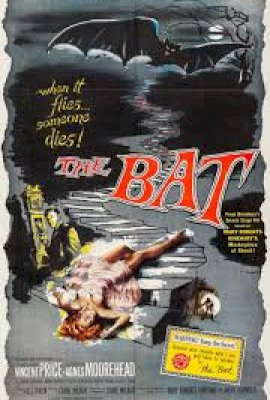
Das Biest - The Bat (1959) (which he also directed)
and Die geheimnisvolle Insel (1961).
Wilbur died on October 18, 1973, in Toluca Lake, CA, of
complications following a stroke.