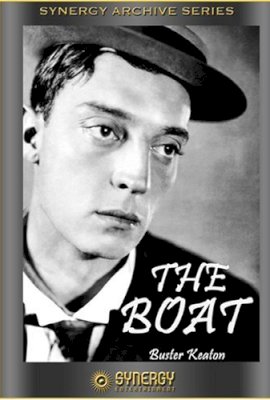
Edward "Eddie" Cline began his career in the film business as
one of the Keystone Cops. The former vaudevillian appeared
sporadically in films as an actor until 1922, but became increasingly
active behind the camera as a gagman and scenario writer for
Mack Sennett. From 1916 he worked on a steady stream of two-reelers, either as director or assistant director, for such comedians as Buster Keaton,
Ford Sterling and Mack Swain. An expert in slapstick comedy with an unerring sense
of timing, Cline was consistently in demand by Hollywood studios during
the 1920s and served short-term contracts with Fox (the "Sunshine" comedies), Pathe, First National,
MGM and Paramount.
During the sound era he had more periods of steadier employment, particularly at
Universal (1939-45). He became the favorite director of comedian
W.C. Fields. In fact, Fields would often
demand Cline's participation, much to the consternation of the studios.
In one instance, director
Edward Sedgwick was assigned to the Fields comedy
Ehrlich währt am längsten (1939), but
was replaced by Cline just two days into shooting because he couldn't get along with Fields. Cline
frequently worked out comedy routines by standing in for the Fields
character in rehearsals. As for being able to get along with the notoriously
prickly star, Cline believed in just "letting him run with it" and
later editing out any unwanted ad-libs (which Fields had a habit of
inserting at the end of his lines). Unfortunately, those famous ad-libs
often tended to crack up the camera crew and ruin the take . . .
Cline directed Fields in some of his funniest comedies, including
Mein kleiner Gockel (1940)
and Der Bankdetektiv (1940) (the
climactic car chase was largely due to Cline's input). He teamed up
once more with Keaton for the
anachronistic slapstick farce
Die Unschuld und der Bösewicht (1940).
Cline's output diminished by the mid-'40s and he retired from
directing in 1951.